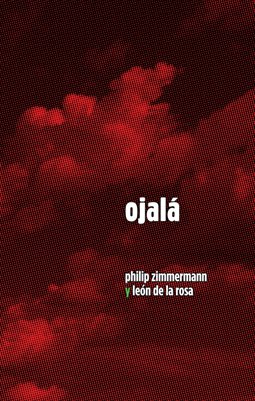
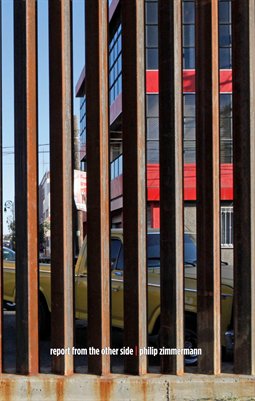
Spaceheater Editions announces a new 2020 title: DELIRIUM

Spaceheater Editions announces a new 2020 title: DELIRIUM
Two-page spread from DELIRIUM

Wednesday, February 13, 2019

Insight on Artists' Books: A Panel Discussion in Special Collections at the University of Arizona Main Library

On Tuesday, February 26th, between 6 and 8 pm, there will be a panel discussion on artists' books. The official title is Insights on Artists' Books: A Panel Discussion. Roger Myers, of Special Collections, organized this event in conjunction with his excellent show, Artists' Books: Photography + Imagination, mounted to coincide with the College Book Art Association (CBAA) Biennial Meeting held here during the first week of January. It's a wonderful show, and if you are local, be sure to go by and see it in the Main Library building.

If you would like to attend the panel lecture, they are asking interested people to RSVP.

My co-panelists at the February 26 evening event are Professor Karen Zimmermann, my wife and Assistant Director of the School of Art, who will do a presentation on typography and it's use in artists' books. Our third panelist will be Charles Alexander, recently moved back to Tucson from Texas. Charles Alexander is an American poet, publisher, and book artist. He is the founder, director and editor-in-chief of Chax Press, an independent press which specializes in innovative poetry and the literary book arts. The panel will be moderated by Roger Myers, Associate Librarian and Archivist in Special Collections.


I will be giving a short general history of the artists' book as creative medium, and then focusing on how traditional 'art books' and 'photo books' differ from artists' bookworks where the book itself is a creative medium and not just a holder of reproductions of text or images. I will mention some of the identifying characteristics of each using as reference the Graphic Continuum Chart that I developed in 2016.

If you are in the Tucson area, I hope you will attend.


Thursday, February 7, 2019

Two New Shows on Opposite Coasts

I am in two new artists' book shows that opened a few days apart, one in New York City, the other in Berkeley, CA. The UC Berkeley show, entitled The Book as Place: Visions of the Built Environment, was curated by Julie Chen. It opened in the Environmental Design Library, 210 Wurster Hall on the UC Berkeley Campus and runs until May 17th. The pictures that I have seen of the show make it look like a very exciting one and I'm sorry to miss it. If I had gone to the CODEX Book Fair this year I would have had a chance.

Here are two photos of the installation, both photographs are courtesy of Julie Chen, Curator.


This year I decided not to go to CODEX, the biannual artists' book show in Richmond, CA, organized by Peter Koch. I had been to every previous one except the first one. My main reason to go is for social reasons: it's a great way to visit with good friends like Julie Chen, who I stay with, Sandra Krupa who also stays with Julie, and Toni Nelson, Julie's good friend from Salt Lake City. And all of us, along with Clif Meador and Barb Tetenbaum, always go to have at least one meal at Chez Panisse, always a big treat. Seeing the dozens of other friends who have tables at CODEX, or are attending, is also fun. Those include John Demeritt, Jack Ginsberg, Robbin Silverberg, Harry Reese, Rebecca Chamlee, Leonard Seastone, Alisa Golden, Bill and Vicky Stewart, and many, many others, depending on if they have a table or are attending that particular year.

CODEX itself has very high quality work and is always curated by Peter Koch. Although I really preferred the original hall where it was held, on the Berkeley Campus, the new location, the Craneway Pavilion in Richmond, is an old World War II tank factory, and is pretty great It is situated right on the water and the views out the windows are spectacular. But it is much harder to get to from anywhere else in the Bay area and has serious sun and lighting problems.

Over the years I have come to realize that only about ten or twelve of the tables at the CODEX Book Fair are of any real interest to me. There is some beautiful letterpress work there, but in the end, the New York Art Book Fair (or the LA Book Fair) is of more interest to me. Although I am definitely interested in artists' books that are not photographic, that genre is one of my primary interests, and there are usually only a handful of vendor tables that feature any photographic artists' books at CODEX. And the CODEX Book Symposium that is mounted concurrently (for an additional $300 fee) is almost never of interest to me. They are usually painfully boring. I am sure I will go to CODEX again though, most likely to the next one in 2021. It is so much fun to spend time with good friends that are part of the artists' book tribe.

The other show that I am in is called Politics of Place, curated by Alexander Campos and Monica Oppen, at the Center for Book Arts in New York City. It is open from January 18th to March 30th, 2019. A description of the show is on their website: "From the mechanisms of colonialism, to intractable wars, displacement has become a catalyst to a contemporary discourse surrounding belonging, homeland and nationhood. The Politics of Place highlights artist books, mainly from Australia and North America, both new world territories that share parallel histories, to explore the longstanding issues centered in 'indigeneity', enslavement, conflict-caused immigration. These issues reflect the undercurrent of political motives and decisions often de-centering and ignoring the voices of those displaced."

Wednesday, February 6, 2019

CBAA Biannual Meeting at the University of Arizona, Tucson

On January 3, 4, and 5, 2019, the School of Art, College of Fine Art and the University of Arizona hosted the College Book Art Association Biennial Meeting here in Tucson. Karen and I were the official hosts, but we had a terrific planning committee and many wonderful volunteers. The theme was The Photographic Artists' Book as mentioned in a previous post. Andrea Howlett, a graphic design student at the University, designed the conference logo, books made to look like a stylized camera, as well as the printed program.


We started the planning in December of 2017 when we agreed to take over having the meeting site in Tucson. Karen reserved the Tucson University Marriott hotel accommodations and signed the contract, reserved the ENR2 Building on campus for the session and meeting location. The day before the meeting, January 3rd, was the day that the 20+-member Board would have an all-day retreat, and Karen was able to rent a meeting room at the Tucson Botanical Garden –with their catering company taking care of food.

We put together a great group of people, including local arts people involved in photography and the arts like Mary Virginia Swanson, (known to all as Swanee), folks from the Center for Creative Photography like Emily Weirich, Roger Myers from Special Collections at the Main Library, doctoral students like Molly Kalkstein, and a number of other grad and undergrads students, plus local arts people like Maria Lee, all of whom would be indispensable.

The first full meeting of the Planning Committee was in April and after a fair amount of discussion we decided to try to get the very well-known Spanish photographer and artists' book maker, Cristina de Middel to be our keynote speaker. She is constantly traveling around the world for Magnum, the photo agency, so we didn't know if we could afford her travel budget, let alone her speaking fee.


[Photo credit: Bruno Morais]

Cristina was very kind and agreed and said that she would reserve the date and offered to do the keynote speech for a very generous amount, given her national and international reputation.

We started to ask various campus entities about having book shows that would be in addition to the very large one that I was planning for the Joseph Gross Gallery in the School of Art. The Poetry Center volunteered to curate a show for their beautiful building, called Artists' Books: Focus on Photography. Roger Myers in Special Collections put together a really interesting show that is still up until May, called Artists' Books: Photography and Imagination.


[One of the cases in the Poetry Center.]

In early May, when the semester was over, we started to plan out the program, with activities, plus the session subject matter that would tie-in to the conference theme. We also started contacting possible panel leaders to see if they were willing to participate. If you are interested in how the program finally evolved, you can still see it by going here.

I started working on the book show that I curated for the Gross Gallery, 50 Years of The Photographic Artists' Book, in early June. I spent about 4 or 5 months going through about 1000 books that I thought would work for the show. By early September I got final budget numbers and knew that I would have to limit the show to eight large vitrines. With fewer cases I knew that I could use another area of the gallery to place video monitors. This would allow me to show more books as well as show some of the books that were in the cases with the pages being turned. I used a 4x8 piece of plywood (the size of each of the cases) to plan out each of the cases. I took photographs of the books in each numbered case so that I could recreate them during installation. I reduced the number of books in the cases to about 310 or so, plus shot and edited another in 123 videos for the monitor displays. The show was installed (cases built in situ) and books and labels placed, plus vinyl signage put up, from Nov. 15 to  Nov. 19. Here is the banner that was out on Speedway Avenue to advertise the book show:


The Fall was a blur: organizing the CBAA event itself, making sure the printed program had no typos; coördinating the way-finding signage and tour group flags. It's too tiresome to list all of the loose ends here. The university closes down from December 23rd until January 2nd, so we really had to make sure all of the computer technology, name tags and lanyards, etc were done or in place by December 23rd. We also had the tote bags screen-printed in early December so that we were able to have them ready to stuff with all of the program, swag stuff, etc that week before Christmas.


The tote bag sported an image from a Dieter Roth book. This book was in the show.

Here is the tote bag stuffing party on December 17th in the Book Art and Letterpress Lab. We also had to corner-round all of the printed programs.


One of the highlights for me was Cristina de Middel's keynote address. She spoke much longer than the 45-50 minutes we had anticipated and we were so happy that she did. She is such a charming and good story teller that she had everyone hanging on her every word. She got a huge round of applause when she finished, and I had several people tell me that she gave one of the best lectures they had ever heard. Sadly, later, I heard that there were a couple of very conservative, commercial photographers who were upset by Cristina's talk. I wish I had been able to talk with them, because I found that extremely hard to believe and wanted to know why. I know the name of one of them, but do not want to publicize them here, mainly not to embarrass him.

We were glad that the event went so well, and happy that we all survived it. One of the most fun things was that we had a whole house-full of old friends staying with us. Most of them stayed several days longer after the CBAA event, and we were able to go hiking and do some other sight-seeing things –as well as share some great meals together.


Sunday, February 3, 2019

Book Show: Fifty Years of Photographic Books, 1968–2018

Last December (2017) Julie Chen asked Karen if we would step in and have us take over as hosts of the January 2019 College Book Art (CBAA) Biannual Meeting. Usually there is a two year window for planning etc. Karen accepted and although I was hesitant, I did come around.

Since the University of Arizona is famous for it's Center for Creative Photography, it's artists' book collection in our Special Collections Library, plus our nationally-known Poetry Center, we thought that the theme for the CBAA meeting should be the photographic artists' book, have shows in all of the above, plus I would curate a show at the School of Art's Joseph Gross Gallery.

I wanted to put together a show that would expose the CBAA members to the huge variety of artists' books that use photographs. Of course many of the members know the classics like Ed Ruscha, but there are so many more that are not on their radar. Clif Meador and I have had many talks about why this is, and we have conjectured that it is partially becasue many of the members are letterpress people and letterpress is not that great a medium for photographic images. On the other side of the coin, I wanted to show the photographic community here in Tucson that there is a huge world of photographic artists' books that go beyond Ed Ruscha or Paul Graham.


This (above) is the mailing postcard.

The show that I curated ended up being a huge effort, primarily because I had thought that we had book vitrines to show bookwork in. It turned out that the University Museum of Art used to have cases, but due to their deteriorated condition and lack of storage space, they had been thrown out. The main library had book cases, of course, but they were in use. They might have been able to lend me one, but that would not have sufficed. I had hoped to mount a very large, inclusive, show that could act as an overview of photographic artists' books from the late sixties on, and one case would not have been nearly enough. I wanted to concentrate on books that were truly 'artists' books' and not just photobooks and traditional monographs, assemblies of single images.

I realized that I would probably have to build simple secure cases for the books in the show. I could not afford to have the books just open on sheets of unsecured plywood since many of the books were very valuable and there was a high risk of having books taken from the gallery. The gallery has one student monitor but that person sits at a desk far above the gallery itself and cannot be a guard for small objects below in the gallery space. A number of books like Francesca Woodman's only artist's book, Ed Ruscha's Twentysix Gasoline Stations and others from artists like John Baldessari, Marcel Broodthaers, and Keith Smith, were far too valuable and irreplaceable to risk theft. I came up with a construction plan for ten cases for about $4,000 and that would be just for the materials.


But that would also mean that we would have to do the construction ourselves, plus raise that money since it was not in the CBAA budget. In the end I was able to raise enough money for eight cases, instead of the ten. The Director of the School of Art, Colin Blakely, and the Dean of the College of Fine Art, Andy Schulz, gave us $1500 and the CBAA Board agreed to give us a little over $1600 to allow us to purchase the materials. I was able to get an incredible price on the cast acrylic plexi by ordering directly from a manufacturer in New Jersey and having them trucked here.


I was most fortunate to have a Creative Writing grad student, Will Stanier, help me move the lumber and 1/4" plexi to the gallery, and two other fantastic people, Lisa Watanabe and Brett Starr, actually help with the assembly of the vitrine cases and the support legs. I never would have made the deadlines for installation without Brett and I am especially grateful to him.

Because the plexi tops were fixed on the case tops, there was no way that visitors could handle the books. Because of both wear-and-tear, as well as security, this was necessary. Of course this is a terrible way to experience books, to see only one two-page spread of each book, and not be able to turn pages and see the books as the time-based art that they are. So early on, I had decided that I would also have to have videos, as many as possible, so that visitors could at least see the way the book pages turned and how the images and text were sequenced.

I talked to Brooke Grucella, the always-helpful director of the Joseph Gross Gallery, and she said that the gallery had some monitors that did not need a video or DVD player. All one had to do was put the looped videos on a flash memory stick and they could be inserted in the back of these LCD monitors and that would be all that was needed.

The hundreds of case labels for the books was another huge hurdle to overcome, and I was very lucky to have the help of both Maria Lee and Brett Starr in a marathon label-typing party we had one Saturday.

I ended up making 123 videos of books with the pages being turned from start to finish. About half were books from the show that I especially felt should be experienced by seeing a person turning the pages, and the other half were books that for some reason (lack of space, too large etc.) were not in the vitrines. I had over three hundred books in the vitrine cases and I had wanted to make videos of all of them, but it was just too much. I do think that this worked out overall though.

Here are some installation shots of the show:


I think that the show was a success. It was a little odd admitting that all of the books were from my own collection, but I have a very large one, and I think I had a really good representative selection that showed the different strains of photographic books in those fifty years. Although I did have a few books that preceded the 1968 date, the first book I bought that was in the show, Andy Warhol's Index Book (196), I actually did buy when I was in high school in 1968. Thanks to Harry Reese for making some suggestions, years ago, about titles that should go into a show that covered this time period. That was very helpful.

If you are interested in the checklist from the show, both books that are in the cases and on the monitors, please write me at , and I will gladly send you the pdf. This past week I finally re-shelved the last book from the show. Phew!

Tuesday, January 29, 2019

Rising Together – A CBAA Traveling Show

Camden Richards, a Board member of the College Book Art Association (CBAA), put together a large traveling show comprised of 'zines, artists' books and prints that involve Social Consciousness. The traveling show will be out on the road from September 2018 until August 2021. My book Landscape of the Late Anthropocene was curated into the show.

The logo for the show, below, gives a good indication of the generally left-leaning slant of most of the works.


The first venue (Fall 2018) was at the University of Utah in Salt Lake City. Somebody on that campus must have sent in a tip to Breitbart News since a few days after it opened, an article was published there on the show.


If you would like to read the article it is here.

The Center for Book Arts in New York City is the second venue, in the Spring of 2019. This is followed by the University of Iowa, next Fall, and then Art Center College in Pasadena, then the University of Puget Sound, and finally Mills College and San Francisco Center for the Book in Spring of 2021.

Hamilton Wood Type Wayzgoose 2018

We have been very busy this past Fall with preparation for the College Book Art Association (CBAA) Biannual Meeting that Karen and I hosted here at the University of Arizona in Tucson. Becasue of that I have been very bad about updating this blog with news and other items, so I am starting an effort to get up to date.


At the beginning of November, Karen and I went to the tenth annual Hamilton Wood Type Museum Wayzgoose, November 2, 3 and 4 in Two Rivers, Wisconsin. If you are not familiar with the term wayzgoose, it is an old word referring to an entertainment given by a master printer to his workmen each year on or about St Bartholomew's Day (24 August). It marked the traditional end of summer and the start of the season of working by candlelight. These days it is any large celebratory gathering of letterpress printers.

I am not particularly interested in letterpress printing and don't use letterpresses, but I am interested in the technology and history of printing. Hamilton was the largest manufacturer of wood type and wood type cases and furniture. The museum is a pretty amazing place. This is a pantograph that is used to make wood type:


And an example of the wood type produced by the pantograph from type high wood that is manufactured at the Hamilton Wood Type Museum. There were a number of worshops and lectures there over those three days.


Here Karen is pulling a print with a new digitally designed wood typeface that was made for the occasion by Mark Simonson. The enfant-terrible from Switzerland, Dafi Kühne, gave workshops and demonstrations that were very entertaining.

We stayed at a very pleasant inn across from the Hamilton museum warehouse called the Lighthouse Inn and we had a wonderful view out our hotel window of beautiful Lake Michigan, with a small beach and waves.


An alarming aspect of our visit to upstate Wisconsin was seeing so many pro-Trump signs and billboards.


Wisconsin has a large number of under-employed whites who are the core supporters of Trump. There are many industries that have suffered a great deal in the past 30 years and this part of Wisconsin has many large abandoned industrial buildings.

On the way back to the Milwaukee airport to catch our flight back home, we stopped at the Kohler Museum. It's a great little museum on the grounds of the bathroom fixture factory grounds, and one of the big attractions are the restrooms. Artists were hired to make special tiles for each of the restrooms and people are encouraged to go into their opposite sex bathrooms to see the wall tiles and fixtures.


Although I enjoyed the trip and the visit to the Hamilton Wooden Type Museum, I don't think that I would go again. Once was perfect.

Friday, October 5, 2018

Brief visit to 2018 NYABF at MoMA-PS1

Keeping up a tradition of about 14 or 15 years, (with one miss many years ago,) at the end of September, I again went to the annual Printed Matter event, The New York Art Book Fair, at MoMA-PS1. This year, I only went to the preview night on Thursday evening, and then spent all day Friday there, which included the "Institutional Hours" on Friday morning when it isn't open to the general public.


Unlike most years, I spent the remainder of the weekend with my kids in Brooklyn, and having a great time eating at local restaurants, and visiting the San Gennaro festival in Little Italy. I hadn't been to that in many years. We had lunch at a great Cambodian restaurant right in the middle of Littel Italy.

We also took the newish NYC Ferries all around Brooklyn, Manhattan, and even headed out to the Rockaways and the boardwalk. The ferries are the best deal in NYC, only $2.75 for wonderful views of NYC from the water. It isn't the Circle Line, but for the money, it can't be beaten. It was also interesting seeing all of the Hasidic Jews about, walking around with their families on the High Holidays on Shabbat on the Greenpoint waterfront with their huge round beaver hats, and the whole family beautifully but extremely conservatively dressed.

Although I didn't really have as much time as I would have liked at the NYABF, I did have a good time talking to friends like Paul Soullelis, Johanna Drucker, Hedi Kyle, Chantal Zakari and Mike Mandel, all of whom have new books out. It was also great to see Bill Burke, who I hadn't seen in many years, perhaps even since I worked on the film stripping and platemaking on his book I want to take picture in the 1980s, at Nexus Press.

I did see some interesting new books: Lisa at Siglio Press is coming out with a new book on Dick Higgins called Intermedia, Fluxus and Something Else Press, selected writings edited by Steve Clay and Ken Friedman.


I told her some of the stories about living next door to Dick and Allison for 15 years as their neighbor in Barrytown, NY. (Among other things, I was Dick's go-to Apple Mac Computer tech trouble-shooter person, but not because I especially wanted to.)

Some other books that I liked were Kodaji Press' In Search of Frankenstein – Mary Shelley's Nightmare by Chloe Dewe Mathews. (Last year was the bicentennial of Mary Sheely's writing of Frankenstein, which she did in a cabin at the foot of a Swiss glacier.) The book is luscious and features a facsimile of Sheely's original manuscript, interspersed with views of the glaciers which she would have looked out at when she was writing it.


I often buy books from Kodaji, one of the more interesting European presses, and have become friends with the proprietor, Winfried Heininger.

People know Dashwood Books as a place to purchase rare and out-of-print photo books, but also hard-to-find Japanese photobooks, a whole genre to its own.  Their place on Bond St. in Manhattan is a photo-book lovers paradise. In the last 10 years, they have moved into also publishing photobooks, though their list is not long. This year they published a great book called Khichdi -Kitchari, by Nick Sethi.


The book is interesting because although it has (currently) hip details like an exposed Smythe-sewn spine, the page edges are sprayed with red paint, and the book has a slightly funky hand-made Indian look to it, which was where it was produced.

This year I had the fewest books ever to haul back to Tucson. This is probably a good thing since my upcoming official status as "retired" means no more regular paycheck, and I will need to be much more careful with my book expenditures.

Sunday, September 2, 2018

New Title: TROPHY by Philip Zimmermann

I am happy to announce the publication of TROPHY. This book is dedicated to my teacher, mentor, and friend, Keith Smith, and was created to honor the occasion of his 80th birthday on May 20, 2018. A slightly different version of the book came out in time for his birthday, but the book was slightly revised later, and the final signed and numbered edition was published a couple of months later, in early August 2018.

 TROPHY is a reaction to the current social and political state of the United States of America and the criminal and immoral administration that currently wields power in our country. Although superficially the subject matter is the cruelty of the Trump sons, their activities are an indicator of the worldview of the morally bankrupt family and administration of Donald J. Trump. The photographs of the animal dioramas and fur details were taken at the International Wildlife Museum in Tucson, AZ. The big-game trophy photographs of Donald J. Trump Jr. and Erik Trump were obtained from the internet, presumably Trump family travel and safari photographs, and have no photographer attribution.

This edition was printed in an edition of fifty and they are signed and numbered. The inside text block and cover were printed by HP Indigo digital printing on archival Mohawk Superfine. The Ex Libris book plate in the front, and the accordion 'arsenal' section at the rear of the book, were printed by archival inkjet pigment on acid-free French Paper Co. paper. The book dimensions are 7" x 7" x 5/8" (17.75cm x 17.75cm x 1.5cm). The book has 68 pages, and is hardcover bound, and is priced at $125. The full book, spread by spread, and a video of the page turning, can be viewed at my website.

Monday, August 13, 2018

Included on website INSIGHTS, for the de Young and SF Legion of Honor

A small 3D animation of my book Nature Abhors was included on a new interactive website about artists books and Sonia Delauney's Blaise Cendrar's La Prose. It's a beautiful didactic website. You can see it here. My books is towards the end if you scroll down through the very long web page. If you would like to see it, click here.


The website for La Prose du Transsibérien et de la petite Jehanne de France, the full title of the book,was part of a symposium mounted by Steve Woodall and the Reva and David Logan Collection of Illustrated Books in July of 2018. This iconic and beautiful scroll-book is dissected and explained. 


Here is a screen-shot of my book, which is a relatively minor part of the web page, but I am proud to be associated in any way with the Delauney book.

The de Young and the Legion of Honor are part of the Fine Arts Museums of San Francisco, located in Golden Gate Park.

Perilous Journeys show at BMoCA

During July, I was part of a six-artist show about the life of those attempting the dangeraous journey across US Southern border. The show was called Perilous Journeys and took place from July 10th and July 29th at the Boulder Museum of Contemporary Art in Colorado. The show was a multi-media event with books (me), photographs and other 2D art, installations and video projections.


A link to the show is here. Thanks to my good friend Melanie Walker for suggesting my name to the curator of the show.


Friday, May 11, 2018

Photobook vs photo-bookwork.

Matt Johnston, a PhD candidate at UCA Farnham, in the UK, posted an interesting short essay on the CBAA Bookartheory blog. He teaches at Coventry University. It's titled The Photobook, Lineage and Intent. In it he mentions that he has been working on "taxonomies, histories and spectrums of the photobook". He mentions Jörg Colberg’s Taxonomy of the Photobook (2018), Doug Spowart’s A Spectrum: Photobook to Artists’ Book (2018) and my Photo-bookwork Graphic-Continuum Chart (2016) below.


Although my Photo-bookwork Graphic-Continuum Chart was first published for Tate Shaw's VSW Biennial Photobook Symposium in Rochester in June 2016, it is a subject that Clif Meador and I had been talking about for more than 20 years. As members of CBAA (College Book Art Association), an organization that is heavily comprised of letterpress and printmaking practitioners, we both came out of a photography and photo-offset background. We were constantly astounded by the fact that many traditional artists' and artists' book publishers knew almost nothing about artists' books that used photography and vice versa. (We used the term that Alex Sweetman coined in the 1980s, photo-bookworks, for photobooks that were authored by the individual photographer and that used the book form as a creative medium, rather than merely a vessel for containing multiple single photographic images.) 

My Photo-bookwork Graphic-Continuum Chart was aimed at photographers who make photobooks, and was specifically addressed to the presenters and audience of the 2016 VSW Photobook Symposium in Rochester NY, directed by Tate Shaw. (I was a presenter.) I thought that breaking down all of the types (typologies) of photobooks, from the most boring monograph or catalog on one end of the spectrum, to photo-bookworks (artists' books) that really took advantage of the book as vessel and medium, on the other end. The photographers, hopefully, could see all of the ways the photobook could be conceived and understood. To illustrate this, I gave specific examples from my large library of photobook and photo-bookworks. My Powerpoint presentations have been less about identifying characteristics (as was discussed and shown ad nauseum in the continuum chart) and more concerned with broader types in the history of the photobook.

Over the years, Clif and I made a concerted effort to try to bridge the two worlds of photo-bookworks and traditional artists' books by an endless series of Powerpoint presentations to both the CBAA crowd and to the Society for Photographic Education (SPE) folks, using every chance that we could. We always felt that even with our missionary zeal, we were just knocking our heads against a wall. 

The last time I gave my taxonomy lecture to a broader photographic audience was in Chicago at the 2013 SPE National Conference, where I presented it to the SPE Educational Forum on teaching photobooks. It was intended as an aid to university professors on how to present and teach the subject. As is well-known, photobooks have become increasingly popular with photo students. That same trip to Chicago, I presented a slightly different version of the taxonomy lecture to Professor Judy Natal's MFA Photography class at Columbia College Chicago, this talk aimed not at teachers but to MFA students. It had many more historical references.

I have also given a newer version of this same lecture at Mary Virginia Swanson's Master Class for professional photographers every January here in Tucson. Later this month, I will be giving a longer version of this presentation for the photo department of FAMU (The Film and TV School of the Academy of Performing Arts) in Prague, Czech Republic.

I was amused to read some of the articles that Mr. Johnston referenced. The reason for my amusement is that in both Doug Spowart's and Jörg Colbergs' recent articles, they laid out a taxonomy for photobooks a bit similar to the one that I have been showing in those aforementioned Powerpoint lectures since about 2000 or before. The categories are very similar, though there are some differences in wording and subcategories, of which I have many more. 

Doug Spowart uses a rather odd color spectrum metaphor for the categories that derives from a quote from Clive Phillpot about refracted "white light". He also has some classifications which seem a little odd, perhaps they are a bit different due to their Australian context. "Emergent Photostream" seems unusual, and the difference between "Innovative Artists' Book" and "Artists' Book Codex" is a little unclear. Johnston tries to distill the categories into a much smaller and broader number of critical "histories" that cover broader areas of interest like The Photographic Album, and The Photo Essay. 

I feel that the closest taxonomy to mine is Jörg Colberg's, though his approach to the subject is purely from a photographers view, and I include all artists that use photography. I suppose the reason for the similarities in Colberg's, Spowarts' and Johnston's taxonomic categories is because the categories come from a commonsense analysis of the history and content of photobooks. 

My subcategories are a bit more granular, for instance, one example is the use of photography in literature, like that of the work of André Breton (Nadja) and W.G Sewald (Austerlitz). As Johnston comments, one of the most important qualifiers is that of intent in the making of the bookwork, and the underlying conceptual content. For instance, for me, an interesting subcategory of the Photo-Artists' Book/Photobookwork classification, is that of the Conceptual photobook, examples being John Baldessari, Ed Ruscha, Dieter Roth, Sol Lewitt and many others. Jörg Colberg's taxonomy is much more addressed to photographers only and does not include artists, as I mentioned, who use photography, which I think is an important part of the discussion.

What started my discussions with Clif Meador on the taxonomy of photobooks was the frustration we had with the ease that many photographers threw the term artists' books around, plus the fact that most photographers were shockingly ignorant of the field of visual books and the history of the book itself. A number of book artists, including Clif, Tate Shaw, Scott McCarney and Joan Lyons sat in the audience at the first VSW Photobook Symposium in 2010 in Rochester and just smiled at the naïveté and ignorance of a number of the photographers who were presenting their work at that symposium. They clearly knew nothing about the history of the visual book, and were basically re-inventing the wheel. Of course this naïveté works both ways. A very highly-regarded curator at a well-known Special Collections, who prides herself on her vast knowledge of artists' books, confessed to me that she had never heard of Michael Snow or his Cover to Cover, one of the great monuments in the artists' book canon. In fact, with the exception of Ed Ruscha's work, every photo-based artist book that I mentioned was unknown to her.